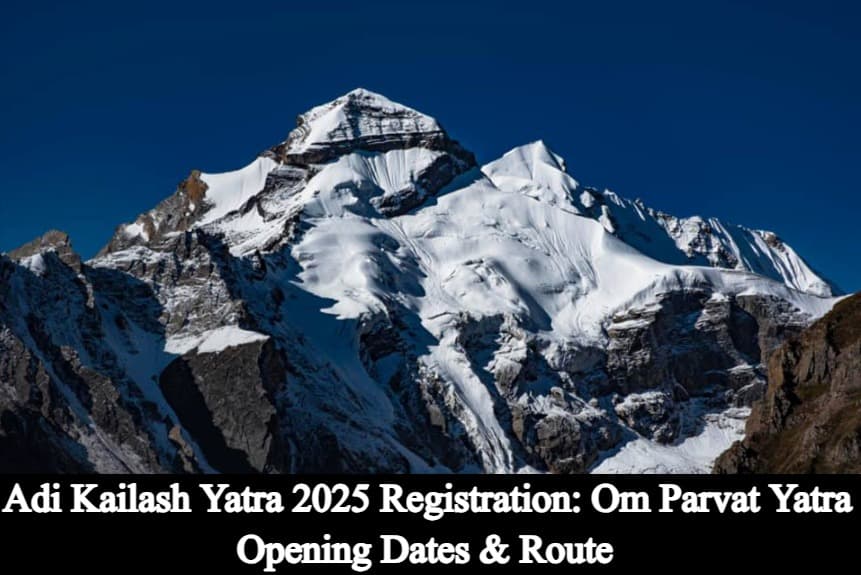
The high Himalayas have a way of calling out to you when you least expect it. If you’ve been dreaming of seeing the miraculous “Om” symbol naturally formed by snow on a mountain face, or standing at the base of the majestic Adi Kailash, 2026 is your year.
Please Subscribe on Youtube
Since the Prime Minister’s visit to Parvati Kund, this region has transformed. What used to be a grueling 100km trek is now a mostly drivable journey, making it accessible to those of us who aren’t professional mountaineers. However, with easier access comes more regulation.
Here is our comprehensive, “human-first” guide to navigating the Adi Kailash and Om Parvat Yatra in 2026—from the paperwork to the high-altitude reality.
1. Understanding the 2026 Yatra Window: When to Start?
Timing is everything in the Kumaon Himalayas. The weather here doesn’t just change by the day; it changes by the hour.
-
Official Opening: The 2026 season officially kicked off on May 1, 2026.
-
The Pre-Monsoon Window (May to June): This is for the snow lovers. You’ll find thick walls of snow along the roads near Jolingkong. The Parvati Sarovar is often partially frozen, offering a surreal, white-out experience.
-
The Post-Monsoon Window (September to October): Our Top Recommendation. If your primary goal is to see the “Om” symbol clearly on Om Parvat, go now. The monsoon rains wash away the dust, leaving the skies crystal clear.
-
The Monsoon “No-Go” Zone (July to August): While the temple remains open, we strongly advise against travel. The road from Dharchula to Gunji is prone to landslides, and you might find yourself stuck in a village for days waiting for the BRO (Border Roads Organization) to clear the path.
2. The New 2026 Route: From Trekking to Jeep Expeditions
The most significant change in 2026 is the road connectivity. You can now reach the heart of the Vyas Valley via 4×4 vehicles.
The Standard 6-Day Itinerary:
-
Day 1: Kathgodam to Dharchula (280 km): A long drive through the hills. This is where you settle into the Kumaoni rhythm.
-
Day 2: The Permit Day in Dharchula: Spend the morning at the SDM office (details below) and explore the town, which sits right on the Nepal border.
-
Day 3: Dharchula to Gunji/Nabi: A dramatic drive along the Kali River. You’ll cross the famous Lipulekh road junction.
-
Day 4: Gunji to Adi Kailash (Jolingkong) & Back: Visit the base of Adi Kailash and the sacred Parvati Sarovar.
-
Day 5: Gunji to Om Parvat (Nabhidhang) & Back: Early morning drive to catch the first rays of the sun hitting the “Om” symbol.
-
Day 6: Return to Dharchula and Kathgodam.
3. Registration and Permits: The 2026 Paperwork Guide
Because the Yatra route moves very close to the Indo-Tibetan border, you cannot simply drive up with your Google Maps. You need an Inner Line Permit (ILP).
How to get your ILP in 2026:
We recommend handling this at the SDM Office in Dharchula. While online portals exist, the ground reality often requires physical verification.
The Document Checklist:
-
Identity Proof: Aadhaar Card (Original + 3 copies).
-
Medical Fitness Certificate: You must have an MBBS doctor certify that you are fit for altitudes up to 15,000 ft. This certificate must be issued within 30 days of your travel.
-
Police Verification: This is the one people forget! Get a character certificate from your local police station in your home city before you leave. It shows you have no criminal record.
-
Affidavit: A notarized indemnity bond (available at Dharchula) stating you are traveling at your own risk.
4. Pro-Tip: Avoiding AMS (Acute Mountain Sickness)
In our experience, the biggest mistake pilgrims make is rushing from Dharchula (3,000 ft) to Gunji (10,500 ft) without a thought.
-
The Rule: Spend an extra night in Dharchula.
-
Hydration: Drink 4-5 liters of water daily. It sounds like a lot, but at high altitudes, your body dehydrates twice as fast.
-
The Garlic Trick: Locals in Nabi village swear by eating raw garlic to help with blood oxygen levels. It’s a pungent but effective traditional remedy!
5. What to Pack? (The 2026 Essentials)
Don’t let the “May opening” fool you. At Nabhidhang, temperatures can hit -5°C even in June.
-
Footwear: Sturdy waterproof trekking shoes. Even if you aren’t trekking, you’ll be walking on snow and slush near the lakes.
-
Clothing: Use the Three-Layer System: A base thermal layer, a middle fleece/wool layer, and an outer windproof/waterproof down jacket.
-
Power: Electricity in Gunji and Nabi is solar-dependent. Bring a high-capacity power bank (20,000 mAh+).
-
Cash: Dharchula is the last place with a functional ATM. Carry enough cash for your entire stay in the upper mountains.
6. Common Questions (FAQ)
Q1: Can we visit Adi Kailash without a tour operator?
Yes, but it is challenging. You will need to arrange your own 4×4 Jeep from Dharchula and handle all permits yourself. For first-timers, a registered Kumaon Mandal Vikas Nigam (KMVN) package or a private operator is much safer.
Q2: Is oxygen available at the base camps?
Most campsites in Gunji and Jolingkong now keep oxygen cylinders for emergencies. However, we recommend carrying a small, portable oxygen can (like OxyPure) for immediate relief during the steep drive.
Q3: What is the age limit for the Yatra?
Officially, anyone between 18 and 70 years can apply. However, the most critical factor is your medical fitness certificate. If you have heart or severe respiratory issues, this high-altitude journey is not recommended.
Q4: Is mobile network available?
BSNL works intermittently in Gunji, but don’t count on it. Think of this as a “digital detox” trip. Inform your family that you will be out of touch for at least 3-4 days.
Final Advice: The Spirit of the Kumaoni Home Stay
While there are some guest houses, we highly recommend staying in the Home Stays of Nabi or Kuti villages. In 2026, these villages have become the heart of the Yatra. You’ll eat local food like Bhatt ki Churkani and Mandua ki Roti while hearing stories of the Pandavas from the elders. It’s an E-E-A-T experience you won’t find in a luxury hotel.
Have you started your physical training for the 2026 season yet? Leave a comment below if you have questions about the police verification process or need help finding a registered operator!